

Everyone is omnichannel. But how do your customers really move?
Your customers look for information on a website. They ask a question in a store. They pay through an app. And they call when something goes wrong. Most companies know which channels they offer. Far fewer know how their customers actually combine those channels, step by step. That is exactly what our omnichannel research approach makes visible.



More channels, more choices, more pressure
The list of channels keeps growing. Next to stores, call centres and websites, there are now apps, chat, WhatsApp, social media and, more recently, AI assistants and video support. Every channel costs money. And every channel promises to make life easier for your customer. So the key question is no longer “Which channel is the most popular?”. The real question is: which channel does which job, for which customer, at which moment? And because budgets and teams are limited, you simply cannot do every channel equally well. You have to choose where to put your effort. Your own system data helps, but it only shows what happens inside your own channels. It does not show what customers do at competitors, at retailers or offline. And it does not tell you why they chose one channel over another.
Our approach: follow the journey, not the channel
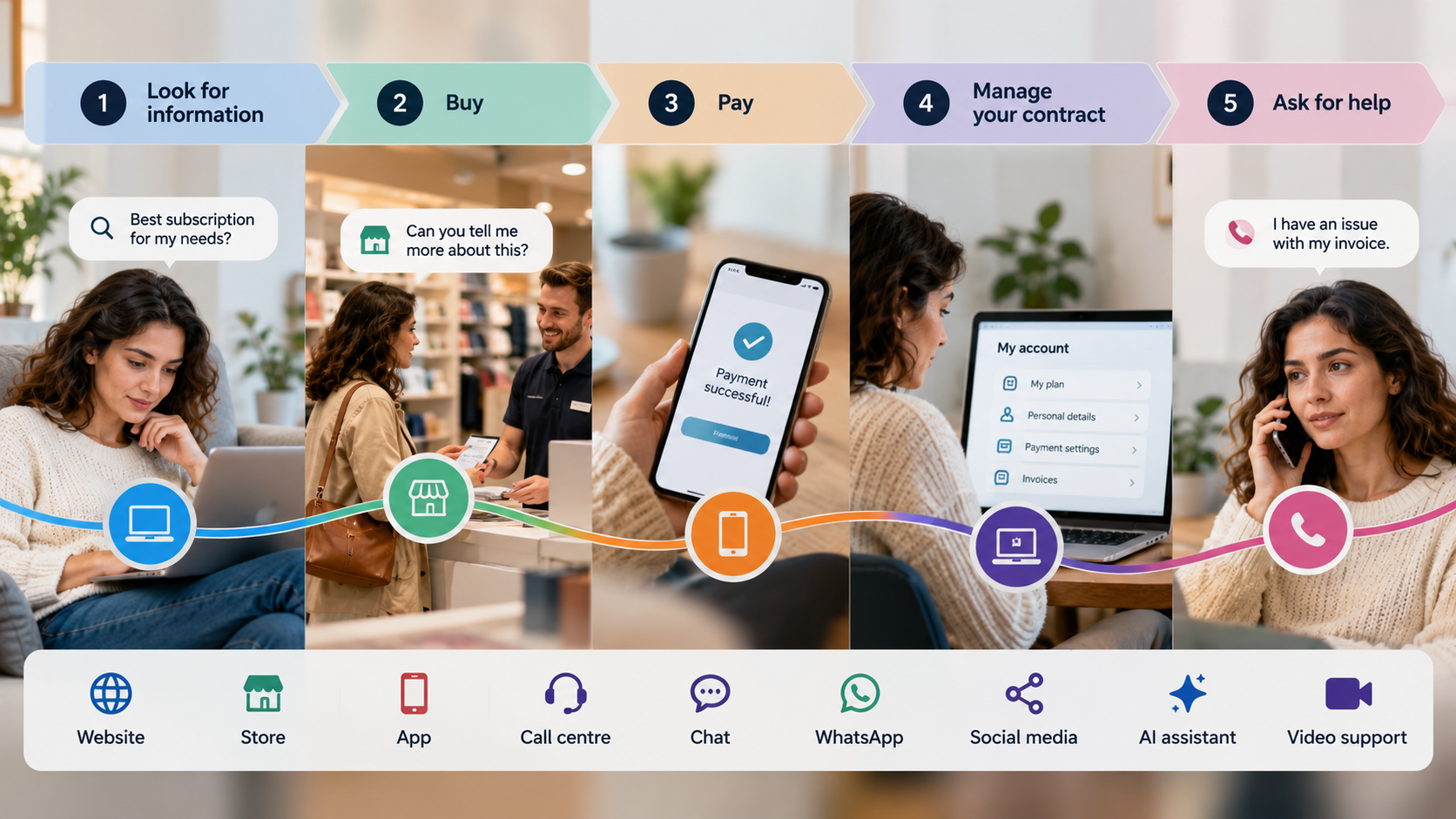
We recently ran a large omnichannel study for a client in a subscription-based service market. Together with the client team, we built a method that puts the customer journey at the centre. It rests on five building blocks:
- A clear journey in five steps. We split the journey into five moments: looking for information, buying, paying, managing your contract and asking for help. For each step, we ask which channels people use or would consider.
- The full channel landscape. We cover human channels and digital channels. We also include new forms of digital help, such as AI assistants, avatars and video support.
- One simple label per step. For every person and every step, we define the behaviour as online only, offline only, omnichannel (a mix of both) or not active. This gives one clear picture that you can compare across steps, products and target groups.
- The who and the why. We link channel behaviour to attitudinal segments, life stage, region, product ownership and professional profile. We also look at which barrier each channel removes: is it about speed and convenience, or about reassurance and help?
- Customers and non-customers. We can deep dive into your customers or are presentative sample of the population to build the right plans for each audience.
What it brings to you
This approach turns a complex channel debate into clear choices:
- Invest where it matters. See in which steps digital can take the lead and where human contact still makes the difference.
- Design for real people, not for the average. Different segments need different journeys. You see who you can guide towards self-service and who needs a person to talk to.
- Spot the battlegrounds. Find the moments where customers leave your own channels and go to competitors or retailers.
- Time your next move. Learn which customer groups are ready for new tools such as AI support, and which are not yet ready.
- Track progress. Repeat the study regularly to measure how your channel mix evolves over time.
Not just for one sector
Banks, insurers, energy suppliers, retailers and service providers all face the same puzzle: many touchpoints, limited budgets and customers with very different expectations. The method works wherever customers move between online and offline contact points, which essentially is everybody nowadays.
Curious how your customers combine your channels?
Let’s talk. We are happy to show you how this approach can support your channel strategy.

Reach out to our expert on the matter

