Your data knows more than you think.
Every research dataset contains patterns that a standard analysis will never surface. Haystack's predictive analytics capability applies validated machine learning models to the data you already have — unlocking predictions, filling gaps, and generating foresight that would otherwise require months of additional fieldwork.








About the solution
What is Predictive Analytics in market research?
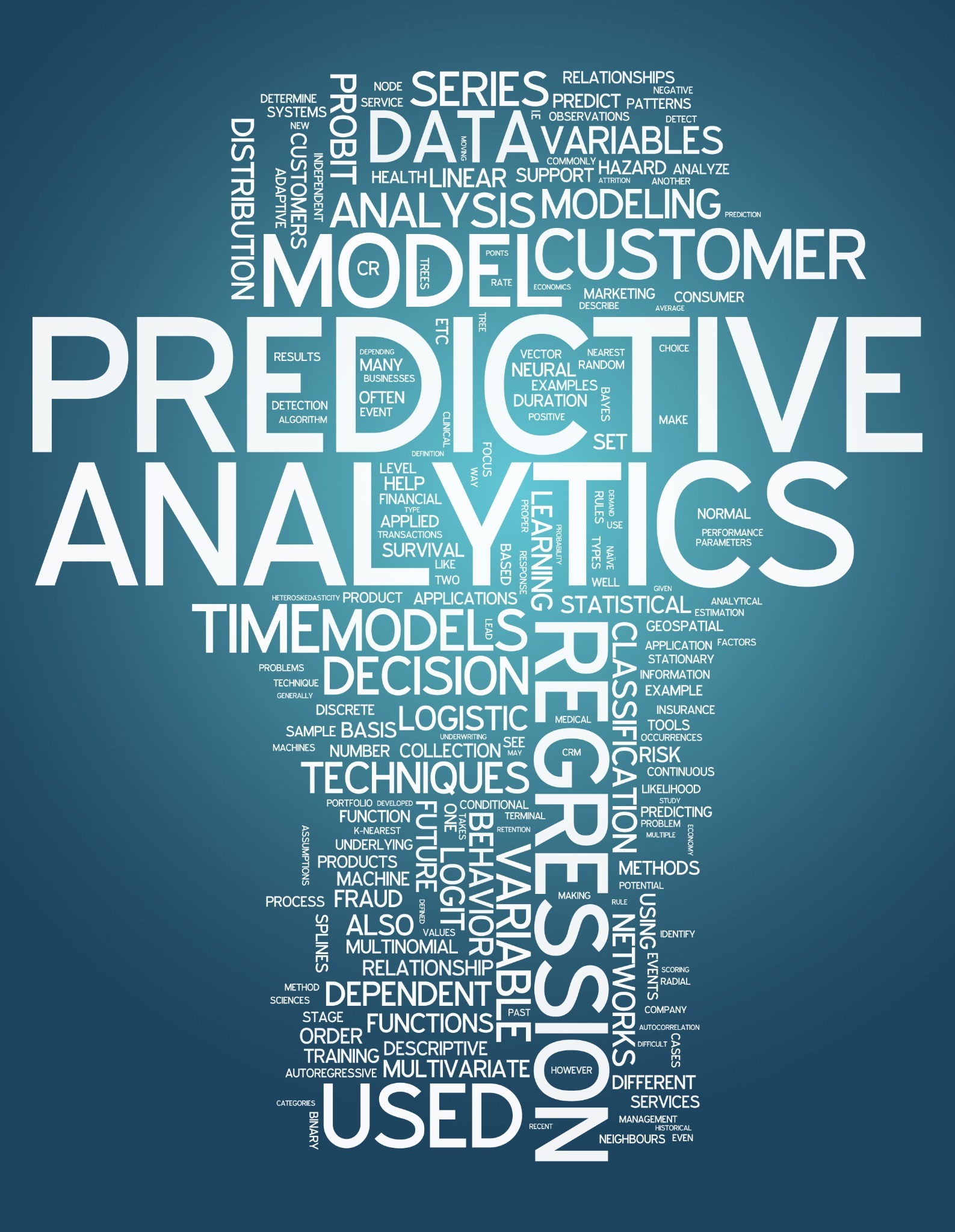
Predictive analytics uses statistical models and machine learning to generate forecasts, simulations, and estimates based on historical data. In a market research context, that means taking what you already know — sensory panel scores, consumer liking data, longitudinal study results — and using it to answer questions you have not tested yet.
At Haystack, predictive analytics is not a standalone technology product. It is a research capability built on validated methodology, grounded in real data, and always interpreted by our research experts before it becomes a business recommendation. Our models are built for your specific category, your specific consumer segments, and your specific research questions. The intelligence they generate is only as trustworthy as the data and validation behind them, and that is where Haystack's expertise makes the difference.
Intelligence from existing data
The most valuable thing about predictive analytics is what it reveals about data you already have. Haystack's models surface the relationships, patterns, and predictions that are hidden in your historical research — without requiring a single additional panel or survey wave.
Validated before it touches a decision
Every predictive model Haystack builds is rigorously tested before deployment. We validate performance on held-out data, benchmark against conventional approaches, and are transparent about confidence levels — so you always know what you are working with and how much weight to give it.
Smarter answers from the data you already have
Predictive analytics at Haystack serves the teams making product, innovation, and research decisions — and who want those decisions to be grounded in more than what a single study can tell them. Whether the challenge is predicting consumer response, filling data gaps, or mapping a full category preference landscape, the goal is the same: more intelligence from the evidence already in your hands.

R&D & product development teams
Predict how consumers will respond to a new formulation before you run a panel. Simulate sensory variants in seconds. Get to your best product faster — with fewer prototype cycles, less wasted development time, and clearer direction at every stage of the innovation funnel.

Innovation & strategy teams
Map the consumer preference landscape of your category. Identify where the white spaces are, where your portfolio sits relative to peak liking zones, and what the data says your next move should be — before you invest in new research to find out.
All decision-making teams
Predictive analytics turns historical data into forward-looking intelligence — giving every team that touches product, consumer, or category decisions a sharper, more evidence-based foundation to build on.

Insights & research teams
Stop letting data gaps slow your reporting down. When real-world conditions leave your dataset incomplete — a panelist missed a session, a study ran short — predictive models fill the missing pieces at the individual level, preserving analytical integrity without costly repeats or delayed delivery.


The data you already have contains answers you haven't found yet.
Most research programmes generate far more insight than a standard analysis ever surfaces. The patterns are there — in the relationships between variables, in individual response trajectories, in the structure of historical panel data. Haystack's predictive analytics capability is designed to find them.


Ideal Partner
Why partner with Haystack Consulting for Predictive Analytics
Predictive analytics in market research is only as trustworthy as the methodology behind it. A model that has not been validated on real data is not a research tool — it is a risk. Haystack's predictive capability is built on validated machine learning methodology, developed and stress-tested in real research contexts — not adapted from generic data science applications.
We bring two things that most analytics providers cannot: deep research expertise and rigorous model validation. Our sensory scientists, methodologists, and data analysts build, challenge, and interpret every model we deploy — so predictions are grounded in category reality, not just algorithmic output. And because our models are built on your data, in your category, they reflect your specific consumer context — not a benchmark built for someone else's research question.
Predictive analytics at Haystack is a research service, not a software subscription. Our team is involved at every step — from data assessment and model building to interpretation and strategic recommendation. The intelligence we generate is always explained, always validated, and always positioned alongside the human expertise that makes it actionable.

Unique process
Two validated tools. One integrated research team.
Haystack currently offers two validated predictive analytics services — each built on a different model architecture, addressing a different research challenge, and delivering a different type of foresight. Both are grounded in the same commitment: rigorous validation, category-specific models, and transparent interpretation.
HaySense — Predict what consumers will love
Predictive liking analytics for product development and innovation
Key use cases
- Prototype screening: Compare predicted liking scores across multiple formulations before committing to consumer panel testing — so you go to panel with stronger prototypes and fewer iterations.
- Sensory landscape mapping: Map the full preference landscape of your category: where high-liking zones are, where your product sits relative to them, and which attribute directions move you closer.
- Reformulation optimisation: Identify the highest-impact sensory changes, in priority order, with an estimated liking lift for each step — turning a reformulation brief into a data-backed development direction.
- Competitive benchmarking: Score competitor products alongside your own portfolio on the same preference model — revealing the sensory gaps and positioning opportunities that no amount of internal testing can surface.
Digital Twins — Fill the gaps your data shouldn't have
AI-powered synthetic data for research continuity and analytical integrity
Key use cases
- Expert panel data completion: When panelists are absent from a QDA session, digital twins reconstruct their missing scores at the individual level — preserving the variance and attribute relationships that mean imputation quietly destroys.
- Longitudinal study gap management: Keep tracking programmes and repeated-measures studies analytically intact when individual waves are incomplete — without costly fieldwork repeats or compromised reporting timelines.
- Research robustness assessment: Stress-test the reliability of a dataset by modelling the impact of data gaps before they occur — and make smarter decisions about when additional research is genuinely necessary.
- High-volume product testing: Maintain data quality and completeness in large-scale testing pipelines where structural incompleteness is an operational reality rather than an exception.
Brand aligned
A partner who builds models you can trust
Predictive models are only as useful as the confidence you can place in them. At Haystack, every model we deploy has been tested, validated, and explained — before it touches a single real decision.

Validated, not assumed
Every Haystack predictive model is tested before it touches a real decision. Performance is benchmarked against conventional alternatives at every stage — and confidence levels are communicated transparently throughout, so you always know how much weight to give a prediction.

Built on your data
No generic models or off-the-shelf benchmarks. Haystack's predictive tools are trained on your specific historical data, in your specific product category, for your specific research question. The intelligence they produce reflects your consumer and category context — not someone else's.

Research expertise behind every model
Our sensory scientists, methodologists, and data analysts build, challenge, and interpret every predictive output. Predictions are grounded in category reality and research experience — not delivered as raw algorithmic output for clients to interpret alone.

Transparent by design
We explain what every model predicts, how it was built, and where its limits are. You always know what is real, what is synthetic or simulated, and what level of confidence to attach to each output — at every stage of the engagement.
How we build and deploy predictive analytics at Haystack
From data assessment to strategic delivery, every step is designed for rigour, transparency, and decision-readiness. Predictive analytics at Haystack is not a black box — it is a structured, expert-led process that puts your team in full control of what the model produces and what it means.

Align
We define the business question and the decision the predictive model needs to support — whether that is innovation, reformulation, competitive benchmarking, or research data integrity. This shapes everything that follows, including which capability (HaySense, Digital Twins, or a combination) is the right fit.

Build
We train the predictive model on your validated dataset — capturing the patterns, relationships, and individual behaviours that make predictions meaningful and category-specific. Model architecture is selected based on your specific research context, not a generic default.

Deploy & interpret
Predictions, simulations, or reconstructed datasets are delivered with full transparency on model performance and confidence levels — alongside expert interpretation that translates the output into concrete research and business recommendations your team can act on.


Assess
We review your historical data: volume, structure, category context, and quality. We advise honestly on suitability and expected model performance before any development begins. If the data is not sufficient to support a reliable model, we say so — and advise on what would be needed to get there.

Validate
The model is stress-tested through holdout validation, benchmarking against conventional methods, and systematic performance testing across different gap scenarios and data conditions. Nothing is deployed until it has proven itself on your specific data.
Align
We define the business question and the decision the predictive model needs to support — whether that is innovation, reformulation, competitive benchmarking, or research data integrity. This shapes everything that follows, including which capability (HaySense, Digital Twins, or a combination) is the right fit.
Assess
No generic models or off-the-shelf benchmarks. Haystack's predictive tools are trained on your specific historical data, in your specific product category, for your specific research question. The intelligence they produce reflects your consumer and category context — not someone else's.
Build
We train the predictive model on your validated dataset — capturing the patterns, relationships, and individual behaviours that make predictions meaningful and category-specific. Model architecture is selected based on your specific research context, not a generic default.
Validate
The model is stress-tested through holdout validation, benchmarking against conventional methods, and systematic performance testing across different gap scenarios and data conditions. Nothing is deployed until it has proven itself on your specific data.
Deploy & interpret
Predictions, simulations, or reconstructed datasets are delivered with full transparency on model performance and confidence levels — alongside expert interpretation that translates the output into concrete research and business recommendations your team can act on.


Don’t just take our word for it

"Great team to work with. Always innovating research agency for sensorial research!"

"Haystack brainstorms with us as a partner to create challenging, innovative, and custom-made projects."

"We have great professional experience with Haystack! They are reliable, dynamic, pleasant and highly flexible. They are specialised in sensory research among others."

"Haystack has a critical approach embedded in their company culture and methodologies. That is why we prefer to work with Haystack."


We provide the most effective solution based on your specific requirements
Frequently asked questions
What data do I need to get started with predictive analytics?

It depends on which capability you are exploring. HaySense requires historical sensory panel data and consumer liking scores within a specific product category — yours, Haystack's, or a combination. Digital Twins require historical individual-level response data from the same panel or study, collected over time. In both cases, we assess data suitability at the start of every engagement and advise honestly on whether the available data can support a reliable model before any development begins.
How is this different from standard statistical analysis?
Standard statistical analysis describes and tests patterns in data that already exists. Predictive analytics generates estimates and forecasts for situations that have not yet been tested — using machine learning models trained on historical data to extrapolate into unobserved territory. The key differences are the direction of the insight (backward-looking vs. forward-looking) and the type of question being answered (what happened vs. what will likely happen or what is probably missing).
Can predictive analytics replace consumer panels or sensory research?
No — and it is not designed to. Predictive analytics reduces the number of panels and research waves you need by helping you screen, simulate, and prioritise before committing to fieldwork. HaySense helps you go to consumer testing with stronger, better-screened prototypes. Digital Twins help you protect the integrity of existing panel data when gaps appear. Both tools make your research programme more efficient — not redundant.
How do I know if the predictions are reliable?
Reliability is determined during the model validation phase, before any prediction is made on live data. Haystack validates every model by testing performance on held-out data the model has not seen, benchmarking against conventional alternatives, and stress-testing under different gap conditions. We then communicate expected performance ranges transparently — so you always know how much confidence to place in a prediction, and where the model's limits are.
Which tool is right for my specific research challenge?
If your challenge is predicting consumer liking, simulating product variants, or mapping the preference landscape of your category — HaySense is the right starting point. If your challenge is incomplete panel or study data, protecting analytical integrity, or reducing costly research repeats — Digital Twins is the right fit. If both challenges are relevant, the two tools can be used in combination. We advise on the right approach during the alignment phase of every engagement.




Your next insight might already be in your data.
Predictive analytics does not always require new research to generate new intelligence. It requires the right models, the right validation, and the right expertise to unlock what your existing data already knows — and translate that into decisions your team can act on with confidence.
If you are ready to find out what your data is really telling you, our team is here to help.