

The bad aftertaste of average coffee
Market research that averages across situations describes nobody, because people buy in specific moments with specific needs and a specific set of alternatives in mind. That averaging is why so many trackers and segmentations end up unused: they describe people in general instead of the buying moments you can actually act on. So build the study around situations and triggers from the start. It takes more effort but you get insights you can actually act upon!


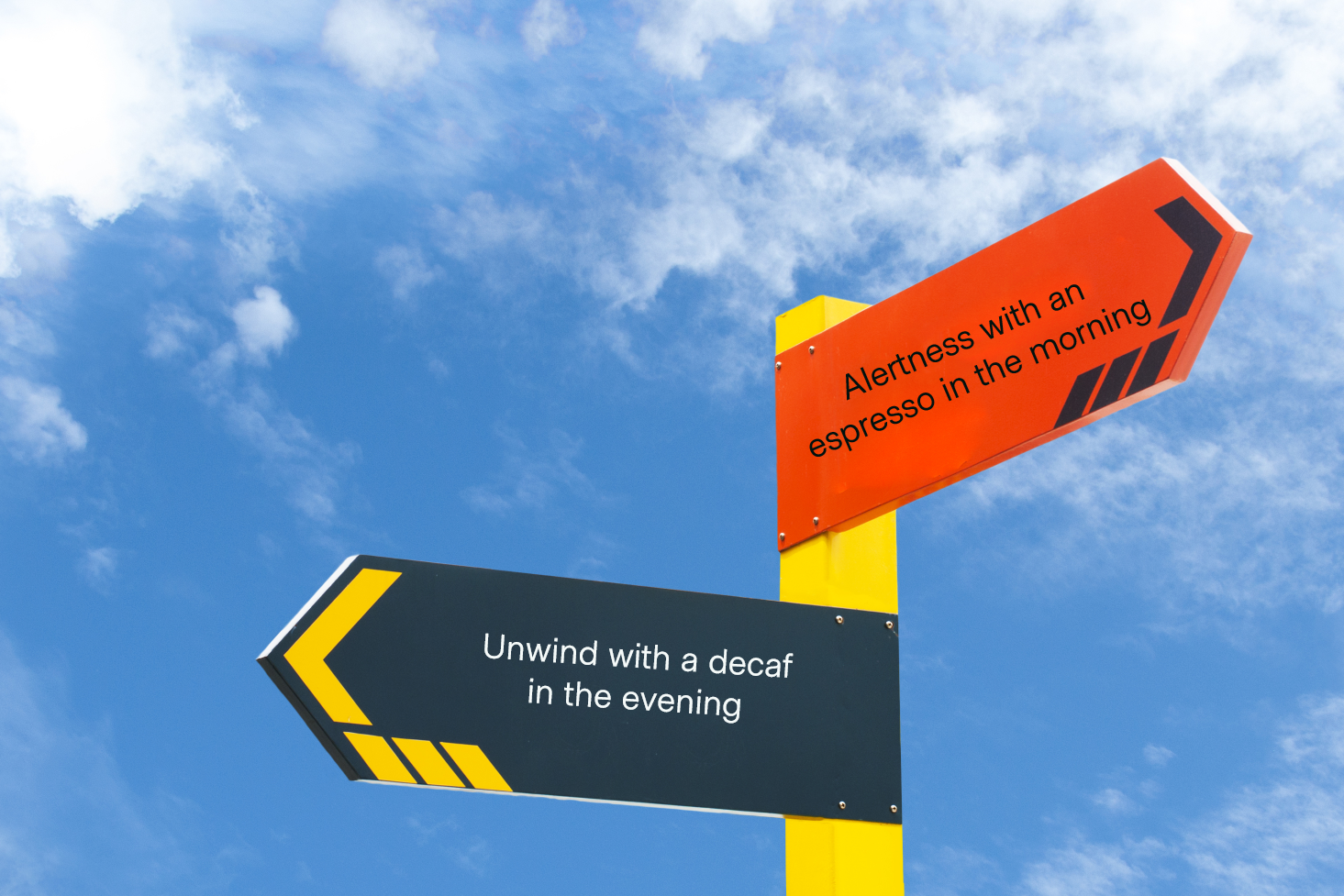
On a Tuesday morning at twenty to nine, Lisa drinks a coffee alone at her desk, laptop still starting up, with her mind already on the upcoming meeting. On Saturday at eleven in the evening, she orders a coffee in a restaurant, at the end of a long, tasty dinner with friends.

The same person, the same category, quite possibly the same brand. And yet almost nothing else about those two moments is comparable: not the trigger, not the need, not the alternatives that were considered, nor whether the price felt reasonable.
In most research, this difference does not show up at all. The two situations are not reported separately, they are reported as an average, which describes neither of them. That matters more than it may seem, because people decide in a specific moment, with a specific need and a specific set of alternatives. What gets simplified away is usually the part a company could make big (star-)bucks on.
Why is this important? Because in our conversations with clients we sometimes hear the sentences below:
If one of those sentences sounded familiar, the cause usually sits in the design of the research rather than in the data.
The key is to build the study around what you intend to do with it. In our conversations with clients, we often see that their trackers, segmentations, ... lack the specifics to make insights actionable. There are a number of ways to improve that actionability. And the right one depends on the decision it has to support. The first recommendation we usually give is to include the situations, moments, buying triggers, etc. that are relevant for the category. That way the focus can shift to moments that matter commercially and can be acted upon. For example: thirsty on the train, guests at the door, the dip at four in the afternoon. The situation comes first and it brings a set of brands (not always the same ones, and sometimes not even from what you see as “your” category) along with it.
However, designing for situations does take effort: it supersedes the superficial and brings more granularity. Probably, there is no single One-Metric-To-Rule-Them-All anymore to report on. In addition, the same person will turn up in more than one need, which could need some explaining internally.
Still, clients that have embraced this way of thinking feel it is worth the effort, because what comes out is considerably more useful and applicable. Take Lisa again. Ask her in general what she wants from a coffee and she’ll say: “I want it black and strong, the stronger the better. I need it to give me a kick”. But ask her in the evening and she’ll say she avoids caffeine in the evening.
Without context they are seemingly contradictory (or one wouldn’t even come up). But put the moment back in and both are true: at twenty to nine the coffee has to do something to her, at eleven at night it has to give her a reason to stay at the table for another twenty minutes. Same person, same category, opposite needs, no contradiction. And a white space becomes somewhere you can point at: a situation where the need exists and your brand is not yet connected to.
We have been building the most challenging multi-country trigger & brand proposition solutions to more rigorous, local research designs, all taking your ambitions into account. By building from situations our consultancy is both strategic and tangible.
Reach out to us if you would like to grab a coffee and discuss the challenges you have in getting your next study, whether a tracker, a segmentation or a one-off, to end in a decision. See how specific I made it 🍵😉

Reach out to our expert on the matter

