Objective data you can trust. No opinion, no bias, just science.
Haystack's expert panel is a team of over 50 highly trained panelists, selected for proven sensory acuity, continuously calibrated, and immediately available for your project. From descriptive profiling to discrimination testing, our panel delivers precise, reproducible,and scientifically robust measurements of what your product actually is, across every sense and every product category.






.png)
About the solution
What is Expert Panel Testing?
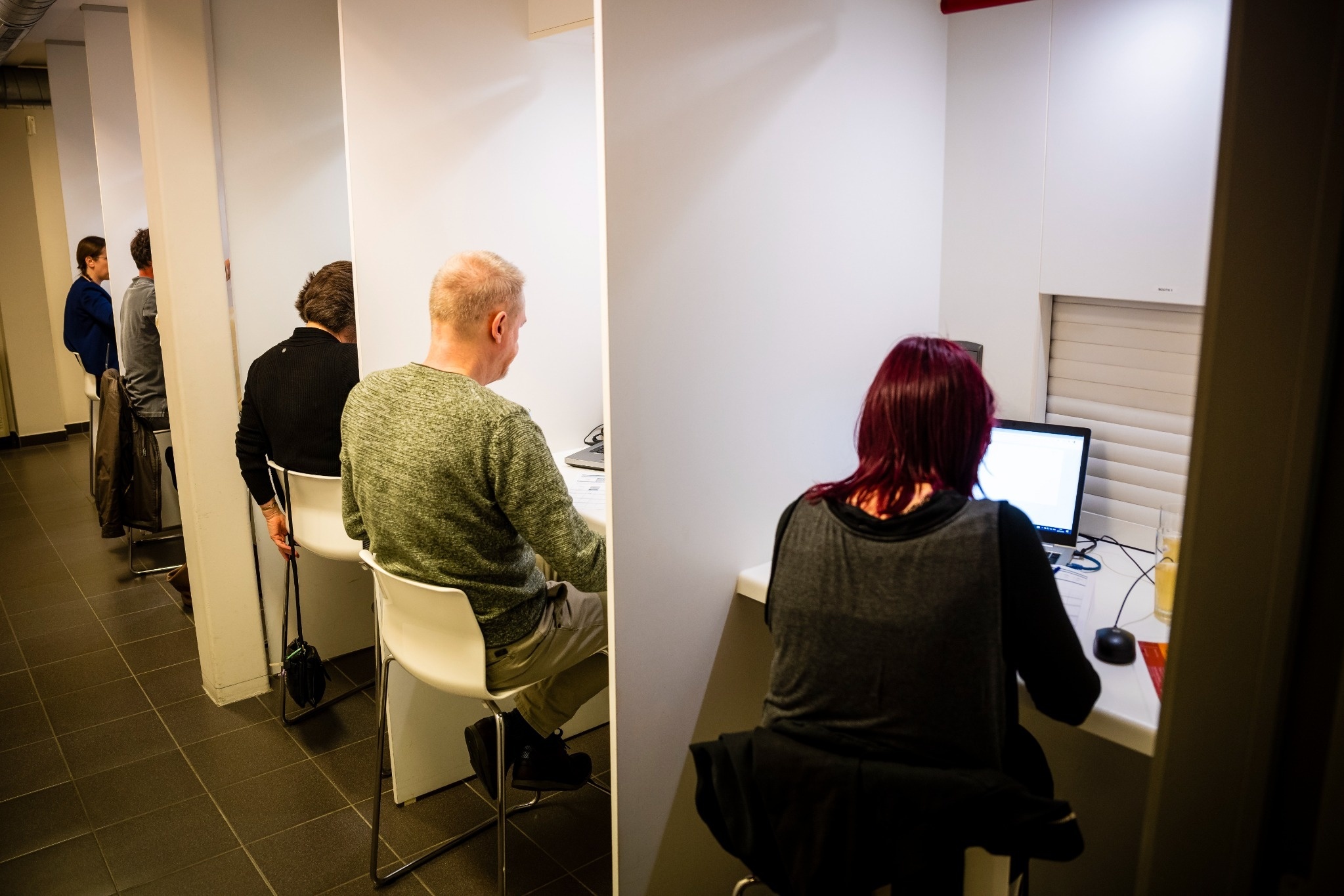
An expert sensory panel is a group of carefully selected and extensively trained assessors who evaluate products using standardised methods under controlled conditions. Unlike consumers, expert panelists do not express preference or opinion — they measure. They detect, describe, and quantify sensory attributes with precision and consistency, across product categories, across batches, and across time.
At Haystack, our expert panel is one of our most significant long-term investments. It is the foundation of our sensory research capability — enabling us to deliver objective, reproducible sensory data for product development, quality control, and innovation decisions, without the recruitment delays and calibration variability of ad-hoc panels.
Built for objectivity
Expert panelists are trained to perceive and describe sensory attributes precisely — not to like or dislike a product. Their data reflects what a product actually is, not how it is received. That distinction is what makes expert panel data the gold standard for product development, quality benchmarking, and reformulation decisions.
Available. Calibrated. Consistent.
Haystack's panel of 50+ panelists is pre-screened, continuously trained, and immediately ready for new projects. Project-specific attribute training is all that is needed to begin — the months-long recruitment and basic training phase that an in-house panel build requires is already complete.
Objective sensory measurement for every product decision
Whenever a product decision requires evidence rather than opinion, expert panel testing is the right tool. Haystack's panel serves R&D, quality, and innovation teams across food, beverage, and non-food categories — delivering the scientific rigour that confident product decisions demand.

R&D & product development teams
Map the full sensory profile of prototypes, compare formulations side byside, and track sensory changes across development cycles — with objective, reproducible data that tells you exactly what changed, by how much, and onwhich attributes

Quality control & QA teams
Verify batch-to-batch consistency, validate reformulations within defined sensory tolerances, and establish scientifically robust product specifications — with discrimination and- profiling data that can be reproduced and benchmarked over time.

Innovation & category management teams
Benchmark your product against competitors, identify sensory whitespaces in the category, and define the target sensory profile for your next innovation — grounded in objective measurement, not consumer opinion or internal assumption.
All product-facing teams
Build a shared sensory language for your product category. Expert panel data gives R&D, marketing, and quality teams a common, objective reference point — so every product conversation starts from the same scientific foundation.


Consumer reactions tell you what people feel. Expert panels tell you what your product is.
Preference and liking research answers a different question from expert panel testing. When you need to know the exact sensory profile of your product — the attributes that define it, the differences that distinguish it from competitors or previous formulations, and the qualities that must be controlled across production — expert panel data is the evidence you need.


Ideal Partner
Why partner with Haystack Consulting for Expert Panel Testing
Building and maintaining an expert sensory panel requires a long-term commitment: months of recruitment, screening, acuity testing, methodology training, calibration, and ongoing performance management. Most companies cannot justify that investment in-house — which is precisely why Haystack's panel exists.
Our panel of 90+ pre-screened and continuously calibrated panelists is available immediately for new projects. They are trained across the full range of sensory methodologies — from QDA to discrimination testing to qualitative mapping methods — and experienced across a wide range of food, beverage, and non-food categories. Project-specific attribute training is the only setup required before your first session begins.
Haystack's sensory scientists manage every aspect of panel performance: attribute generation and alignment, protocol design, session management, data analysis, and reporting. Clients are welcome to observe training and profiling sessions at our Heverlee facilities — so the science we conduct is transparent and the insight we generate is shared, not just delivered.
Our sensory consultancy track record reflects the same depth of panel expertise we bring to every expert panel project.
.png)
.png)
Unique process
Trained across the full sensory toolkit. Ready for your product.
Haystack's expert panel is trained in different sensory methods — each designed to answer a different type of product question. The right method is always selected based on your objective, your product, and the decision your data needs to support.
DESCRIPTIVE METHODS — FULL SENSORY PROFILING
- Quantitative Descriptive Analysis (QDA): The flagship method for full sensory profiling
- Consensus Profiling: Fast pragmatic profiling
DISCRIMINATION METHODS — DIFFERENCE TESTING
- Degree of Difference (DOD): Attribute-specific difference quantification against a reference
- Tetrad Test, Triangle, Duo-Trio & Other Forced-Choice Methods: Full range of discrimination methods for any difference question
QUALITATIVE & MAPPING METHODS
- Napping: Rapid product landscape mapping
TEMPORAL METHODS — DYNAMIC SENSORY PROFILING
- Temporal Dominance of Sensations (TDS) & Time Intensity (TI): The full sensory trajectory, not just a snapshot
Brand aligned
A partner who brings scientific rigour to every product decision
Expert panel data is only as reliable as the panel behind it. At Haystack, the quality of our panel is not a project decision — it is a long-term commitment built into how we operate.

Pre-screened. Continuously calibrated.
Every Haystack panelist passes a rigorous sensory acuity screening before joining the panel. They are continuously retrained, recalibrated, and performance-checked. Consistency is built in, not assumed.

Two dedicated sensory labs in Heverlee
All expert panel testing runs in Haystack's controlled sensory facilities: quiet, scent-free environment; temperature and atmospheric pressure control; equal and adjustable lighting (including colour-masking options to eliminate visual product differences when required); EyeQuestion software for standardised real-time data capture. Flexible sample storage and preparation — cold and ambient — for any product category.

50+ panelists. 20+ product categories.
From soft drinks and alcoholic beverages to dairy, sweet goods, savoury products, functional ingredients, and non-food categories (home care, fabric care, personal care, packaging) — Haystack's panel brings prior category experience to every project. New category training is the only setup step required.
Your project starts sooner
Because recruitment, screening, and foundational training are already complete, Haystack expert panel projects launch without the 3–6 month lead time that an in-house panel build demands. Project-specific attribute alignment is all that stands between your brief and your first data.
How we run your expert panel project
From kick-off to debrief, every step of a Haystack expert panel project is designed for scientific precision, transparent execution, and actionable output. Clients are welcome — and encouraged — to attend key sessions and observe the panel in action.

Kick-off & alignment
We share all relevant background information, define project objectives and expected outcomes, agree on the testing methodology, protocol, and panel size, and set the session timeline. Existing client protocols, attribute lists, or benchmarking standards are reviewed and incorporated.

Sensory sessions
Products are evaluated under fully controlled conditions in Haystack's sensory labs. Session design — monadic or simultaneous presentation, number of products per session, number of replications, palate cleansing protocol — is determined by the method and product type. EyeQuestion captures all panelist responses in real time.

Report & structured debrief
Haystack delivers a complete PowerPoint report including raw data, methodology description, attribute list, visual outputs (line plots, spider plots, sensory maps, TDS curves), statistical tables with significance indicators, and clear, concrete conclusions. A 1-hour structured debrief is standard — to discuss results, answer questions, and translate findings into development recommendations.


Project-specific training
Panelists are familiarised with the product set, generate or align on the attribute list for the specific category and product range, rehearse scoring protocols, and calibrate scale usage. Client-specific attributes and terminology are incorporated. Clients are welcome to attend training live at Haystack's Heverlee facilities.

Statistical analysis & panel performance check
Data is processed using the appropriate statistical framework: ANOVA with post-hoc testing for QDA; chi-squared or binomial testing for discrimination methods; multivariate analysis (PCA, MFA) for profiling and mapping. Panel performance (agreement, repeatability, discriminating ability) is verified before reporting.
Kick-off & alignment
We share all relevant background information, define project objectives and expected outcomes, agree on the testing methodology, protocol, and panel size, and set the session timeline. Existing client protocols, attribute lists, or benchmarking standards are reviewed and incorporated.
Project-specific training
All expert panel testing runs in Haystack's controlled sensory facilities: quiet, scent-free environment; temperature and atmospheric pressure control; equal and adjustable lighting (including colour-masking options to eliminate visual product differences when required); EyeQuestion software for standardised real-time data capture. Flexible sample storage and preparation — cold and ambient — for any product category.
Sensory sessions
Products are evaluated under fully controlled conditions in Haystack's sensory labs. Session design — monadic or simultaneous presentation, number of products per session, number of replications, palate cleansing protocol — is determined by the method and product type. EyeQuestion captures all panelist responses in real time.
Statistical analysis & panel performance check
Data is processed using the appropriate statistical framework: ANOVA with post-hoc testing for QDA; chi-squared or binomial testing for discrimination methods; multivariate analysis (PCA, MFA) for profiling and mapping. Panel performance (agreement, repeatability, discriminating ability) is verified before reporting.
Report & structured debrief
Haystack delivers a complete PowerPoint report including raw data, methodology description, attribute list, visual outputs (line plots, spider plots, sensory maps, TDS curves), statistical tables with significance indicators, and clear, concrete conclusions. A 1-hour structured debrief is standard — to discuss results, answer questions, and translate findings into development recommendations.


Don’t just take our word for it

"Great team to work with. Always innovating research agency for sensorial research!"

"Haystack brainstorms with us as a partner to create challenging, innovative, and custom-made projects."

"We have great professional experience with Haystack! They are reliable, dynamic, pleasant and highly flexible. They are specialised in sensory research among others."

"Haystack has a critical approach embedded in their company culture and methodologies. That is why we prefer to work with Haystack."


Ready to know exactly what your product is?
Objective sensory data is the foundation of confident product decisions. If you're ready to add scientific certainty to your R&D, quality control, or innovation process, our panel is ready for your project.
Frequently asked questions
How many panelists are involved in a typical expert panel project?

For QDA profiling, Haystack works with 12–13 panelists per project, sufficient for the statistical analysis required and aligned with ISO standards for descriptive testing. For discrimination tests such as the tetrad or triangle, the required number of assessors is calculated based on the desired statistical power, alpha and beta risk levels, and the sensitivity of the method. Haystack calculates the optimal panel size for each study during the design phase.
What product categories can the Haystack expert panel evaluate?
The panel has experience across a wide range of categories: soft drinks (water, cola, energy, tonic); alcoholic beverages (beer, cider, spirits, seltzers); dairy and plant-based alternatives (milk, yoghurt, cheese, skyr); sweet goods (chocolate, cookies, pastry, ice cream, candy, cereals); savoury goods (meat and alternatives, seafood, sauces, chips); hot drinks (coffee, tea); functional drinks and supplements; ingredients (cocoa powder, protein powders); and non-food (home care, fabric care, toothpaste, mouthwash, packaging). For new categories, project-specific attribute training prepares the panel before sessions begin.
How long does an expert panel project typically take?
Timeline depends on the method, number of products, and number of sessions required. A standard QDA project (covering up to 6 products with 1 training and 2 profiling sessions) typically runs 4–6 weeks from kick-off to report delivery. Discrimination tests (tetrad, triangle) are faster, often completing within 2–3 weeks. Napping and consensus profiling are typically completed within a single-session format of 3 hours. Haystack provides a detailed project timeline during the alignment phase.
What is QDA and when should we use it?
Quantitative Descriptive Analysis (QDA) is the gold standard method for generating a full, objective sensory profile of a product. Trained panelists score the intensity of each sensory attribute on a calibrated scale, producing a complete sensory fingerprint that shows exactly how the product is perceived across all relevant dimensions. Use QDA when you need a full sensory profile, want to compare multiple formulations, need to track product change over time, or want to benchmark against competitors.
Can we attend the sensory sessions?
Yes, and we actively encourage it. Clients are welcome to observe training sessions, profiling sessions, and napping or consensus discussions at Haystack's Heverlee facilities. Being present during a session builds first-hand understanding of how the panel evaluates your product and gives product teams direct access to the panel's language and observations before the formal report. A structured debrief can be organised directly after the session for immediate feedback.




, Your product has a sensory fingerprint. Let's measure it.
Expert panel testing answers the questions that consumer research cannot — what your product actually is at a sensory level, how it differs from competitors or previous formulations, and where the attributes that define it are strongest and where they need work.
Whether you need a full QDA profile, a discrimination test, a napping to orient a new product landscape, or a temporal analysis of how your product's experience unfolds — Haystack's panel is ready for your project.