

Future-focused research to navigate change
What happens when an entire retail channel is forced to rethink its role for the future? What changes need to be made to retain relevant for future customer journeys (future shopping behaviour)?


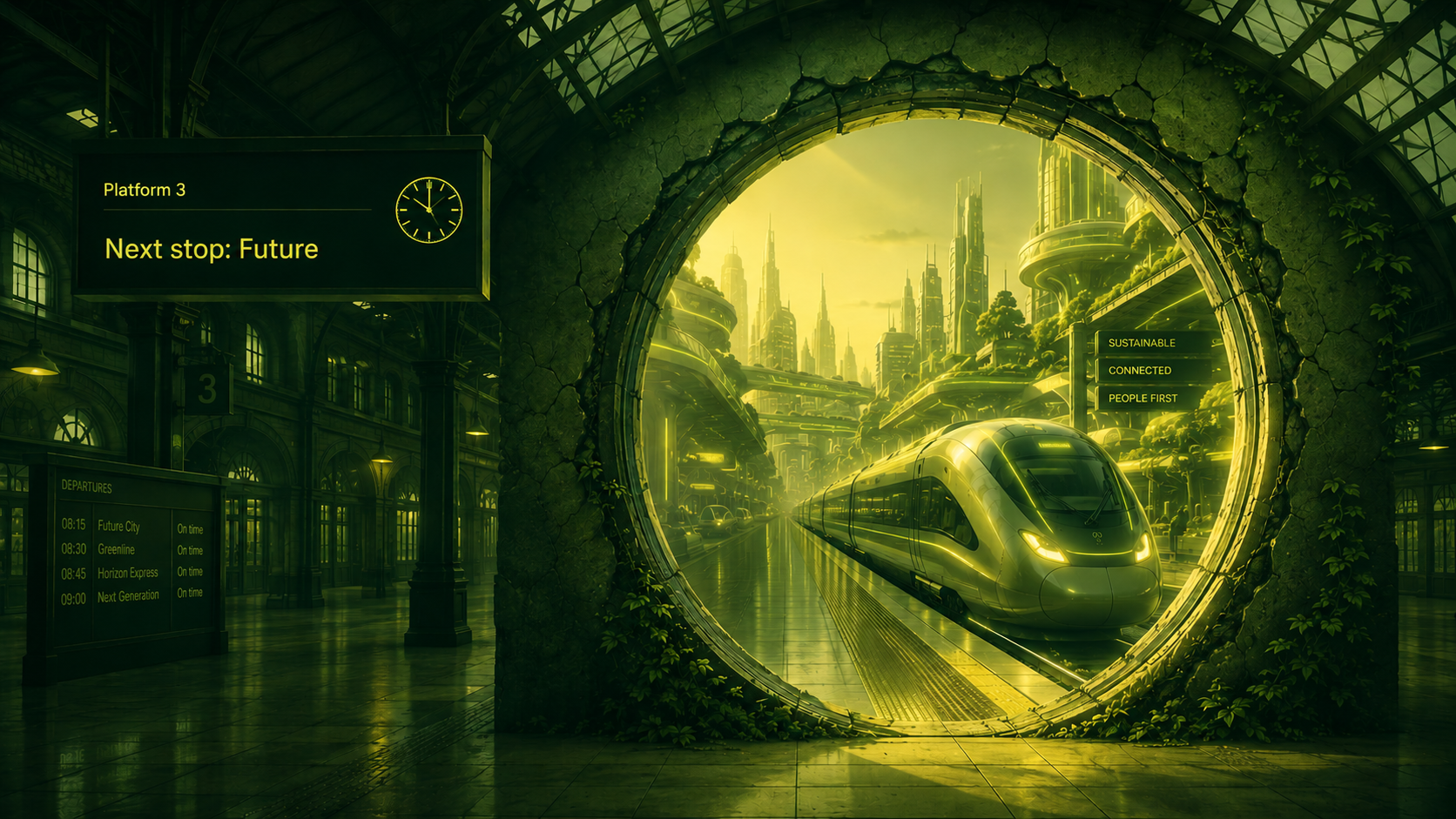
That question sat at the heart of a recent research project conducted by Haystack Consulting. Rather than focusing solely on current shopper behaviour, the study explored how evolving mobility and legislation patterns, digitalisation and changing routines could reshape an established retail channel over the next decade.
The objective was not simply to understand today’s customer journey, but to identify what future relevance could look like in a world where traditional triggers to visit this retail channel may gradually disappear. This project is a strong example of future-back thinking in action.
A word on Future-back thinking:
While traditional research often starts with today’s reality and seeks incremental improvements, future-back thinking begins by exploring how the world itself may change, and then works backwards to identify what companies should do today to remain relevant tomorrow.
So, instead of asking only “What do consumers want now?”, this approach investigates broader societal and behavioural shifts: emerging technologies, changing expectations, evolving routines and cultural transformation. From there, researchers assess how these changes may influence emotional needs, decision-making and the role these channels, the brands or categories can play a role in people’s lives in the future.
To bring these future scenarios to life, Haystack combined deep qualitative expertise with its Virtual Audience© methodology. Twenty carefully developed synthetic consumer personas were created to represent a wide spectrum of lifestyles, mobility behaviours and shopping motivations.
The project was led by strategic researchers specialised in behavioural understanding, cultural observation and pattern recognition. Rather than relying on trend forecasting alone, the team examined how large-scale societal shifts intersect with everyday routines, emotions and human decision-making.
This approach enabled the team to move beyond surface-level insights and uncover deeper behavioural tensions and emerging cultural patterns.
The value of this type of research lies not only in understanding what consumers say today, but in interpreting what broader shifts may mean for the future of categories, services and customer expectations throughout the whole customer journey in that changing retail channel. It requires the ability to connect weak signals, contextual behaviours and emotional drivers into meaningful strategic direction.
A major strength of the methodology is its iterative nature. The team could continue testing questions/hypothesis based on the initial findings. The reason is that a Virtual Audience© never sleeps, and is relatively budget effective, so the team was not restricted in the number of hypothesis/questions to check. This created a more dynamic process and allowed insights to evolve alongside the strategic discussion.
For Haystack Consulting, this project demonstrates perfectly how predicting the future through qualitative research helps companies to make better decisions now, to deliver top-notch value in the future.
This is what the client had to say:
“This was really good—there were things we already knew, but also new and interesting insights that we can now take further.”
The future is now. Let’s connect to start the conversation.

Reach out to our expert on the matter

